Central heating
A system distributing heat from one source to multiple spaces.

Central heating is a system that provides warmth to multiple spaces within a building from a single main source of heat. It differs from space heating by generating heat in one location—such as a furnace room or basement—and distributing it throughout the building via forced air, hot water, or steam. Central heating has been developed and refined over centuries, with early examples found in ancient Korea, Greece, and Rome, and modern systems emerging in the late 18th to mid-19th centuries.
- earliest_known_use
- circa 4th century BC (Iron Age Korea)
Lore & Background
The earliest known central heating is the ondol from Korea, with archaeological evidence dating to around the 4th century BC. The ondol used an agungi (firebox) to heat a raised masonry floor via horizontal smoke passages, serving both cooking and heating. The Roman Empire developed the hypocaust, which circulated heated air under floors and through wall pipes. After the Roman collapse, Europe reverted to fireplaces for nearly a thousand years, though some early medieval Alpine sites used underfloor channels. Modern central heating systems—hot air, steam, and hot water—were developed in the late 18th to mid-19th centuries. These innovations became standard for heating small buildings for the rest of the century.
Reader's Guide
Central heating represents a fundamental shift from localized heating sources like fireplaces to a unified system that improves temperature uniformity and convenience. Its development spans millennia, from the Neolithic ondol in Korea to Roman hypocausts and medieval Cistercian innovations, showing a persistent human drive for efficient indoor warmth. The modern era brought three main methods—hot air, steam, and hot water—each refined in the late 18th to mid-19th centuries by figures like William Strutt, Charles Sylvester, and James Watt. These systems allowed automatic control, fuel handling, and zoning for large buildings, and could incorporate central air conditioning when ductwork was present. Central heating became common in detached housing in much of the temperate climate zone before the Second World War, initially using coal, then fuel oil or gas. Alternatives include electrical heating (practical only with low-cost electricity or ground source heat pumps), central solar heating, and district heating, which uses waste heat from industrial processes. The legacy of central heating is its role in enabling comfortable, controlled indoor environments for homes, hospitals, and large buildings, influencing architecture and energy use worldwide.
Did You Know?
- The earliest known central heating system, the ondol, dates to around the 4th century BC in Korea.
- The Roman hypocaust circulated heated air under floors and through pipes in walls.
From Roman Baths to Commercial Scale
District heating's lineage stretches back to Roman-era hot water baths and greenhouses, but the first system widely recognized as a true district heating network emerged in Chaudes-Aigues, France, during the 14th century. There, geothermal warmth was channeled to roughly thirty dwellings, marking an early attempt at centralized thermal distribution. Centuries later, the U.S. Holly is now regarded as the founder of the modern industry, transforming what had been isolated institutional experiments into a scalable, market-driven model for delivering warmth to entire communities through networks of insulated piping.
Four Generations of Technological Evolution
The architecture of district heating has progressed through four distinct generations, each defined by a hallmark innovation. The first generation, emerging in the 1880s in the United States and later adopted across parts of Europe, relied on coal-fired steam piped through concrete ducts. While revolutionary for its era, these systems suffered from poor efficiency, limited reliability, and safety concerns, and are now considered technologically obsolete—though a few still operate in cities like New York and Paris. The second generation, built between the 1930s and 1970s, shifted to pressurized hot water above 100 °C and leveraged combined heat and power plants for primary energy savings; Soviet-style networks in Eastern Europe exemplify this era. The third generation, often called Scandinavian district heating technology, introduced prefabricated pre-insulated pipes buried directly in the ground, operating below 100 °C, and was driven by security-of-supply concerns following the oil crises. The fourth generation, currently taking shape in Denmark, is engineered to integrate variable renewable energy and provide flexibility to the broader electricity grid.
Diverse Fuel Palette and Carbon Advantage
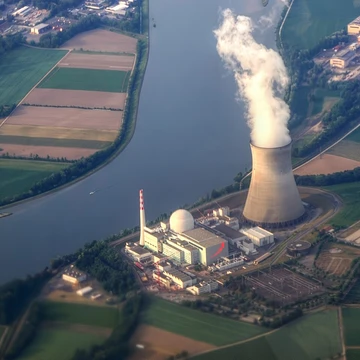
The thermal output behind district heating networks draws from a remarkably diverse palette of sources. Cogeneration plants burning fossil fuels or biomass remain common, but heat-only boiler stations, geothermal wells, heat pumps, and central solar installations also feed the pipes. Industrial waste heat and surplus thermal energy from nuclear electricity generation represent additional contributors. This diversity is not merely a matter of redundancy; it underpins a genuine environmental edge. District heating plants can achieve higher thermal efficiencies and tighter pollution control than the localized boilers they replace. Research cited in the field suggests that district heating paired with combined heat and power ranks among the least expensive strategies for reducing carbon emissions, carrying one of the smallest carbon footprints of any fossil-fuel generation approach. The recognition is formal in climate policy circles: Project Drawdown, a comprehensive ranking of solutions to global warming, places district heating at number twenty-seven on its list of one hundred most impactful interventions.
The Fourth Generation and the Road to Net Zero
The fourth generation of district heating is not simply an incremental upgrade; it is a fundamental reimagining of the network's role in the energy landscape. Already in transition in Denmark, these systems are explicitly designed to combat climate change by absorbing high shares of variable renewable energy and offering substantial flexibility to the electricity grid. According to the review by Lund and colleagues, fourth-generation networks must deliver low-temperature heat suitable for existing buildings, renovated structures, and new low-energy constructions alike, while maintaining low grid losses. They must recycle heat from low-temperature sources, integrate solar and geothermal inputs, and function as a seamless component of smart energy systems that unify electricity, gas, fluid, and thermal grids—including fourth-generation district cooling. Supply temperatures drop to 70 °C or below to maximize efficiency. Candidate heat sources span industrial waste heat, biomass-fueled CHP plants, geothermal and solar thermal energy, large-scale heat pumps, and even waste heat from data centers and cooling operations.
Frequently Asked Questions
Who is Central heating?
Central heating is a building-wide warmth system that generates heat at a single point—such as a furnace or boiler—and sends that warmth to every room through ducts, hot-water pipes, or steam lines. Unlike individual space heaters, it treats the entire structure as one connected thermal circuit.
What are Central heating's powers/role?
Its core function is to take heat produced in one location and distribute it across multiple rooms or floors, keeping the whole building at a consistent temperature. Modern setups typically use forced warm air, circulating hot water through radiators, or steam pipes to deliver that comfort.
How does Central heating's story end?
Rather than having a single ending, central heating has been continuously refined from its ancient roots into the efficient, zoned, and programmable systems found in homes and offices today. Its arc is an ongoing evolution toward lower energy use and greater occupant comfort.
Why is Central heating important?
It allows an entire building to stay warm using one heat source, which is far more energy-efficient than running a separate heater in every room. That single-point generation also makes maintenance, fuel switching, and temperature regulation much simpler for building owners.
When did Central heating first appear?
The earliest known example dates to roughly the 4th century BC in Iron Age Korea, where underfloor heating channels warmed living spaces. Similar concepts later appeared in ancient Greece and Rome, while the modern boiler-and-radiator era emerged between the late 1700s and mid-1800s.
More in Energy & Power 1-24
Spotted an error? Know more?
This is a living reference — every entry is fact-audited, and reader corrections feed straight into our audit queue. Suggest an edit · See this site's audit record